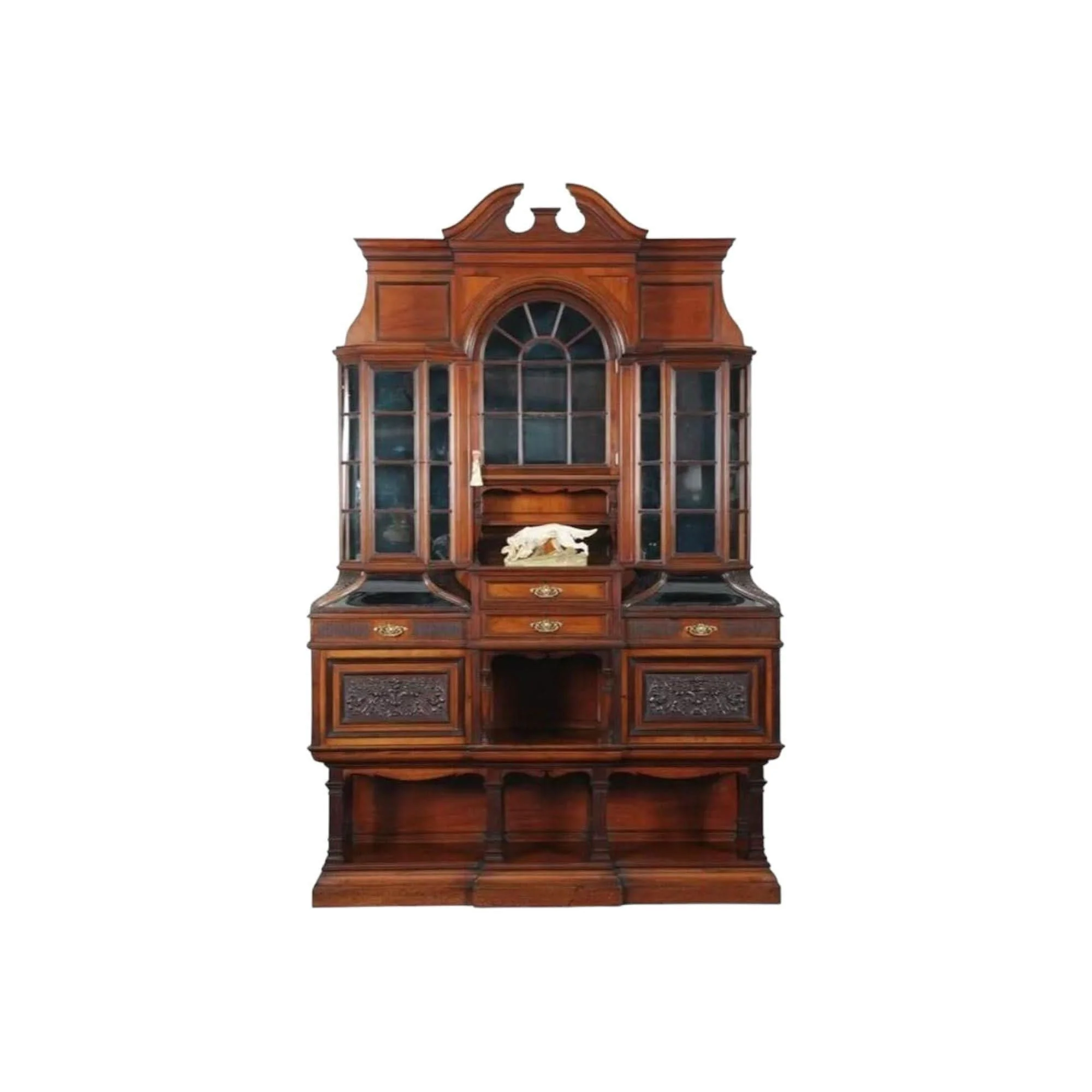
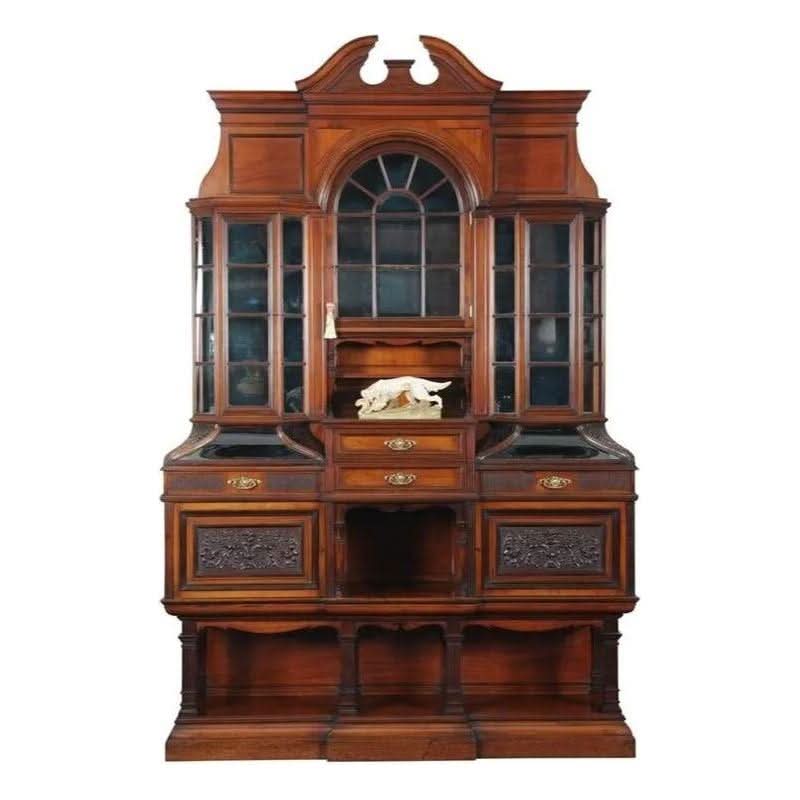
Four drawer low cabinet
Early 20th century
- elm wood
- 163cm W x 40cm D x 46cm H
Elegant and practical item. Perfect for flat screen TVs.
Before the advent of the chair-level mode of living in about the 10th century, Chinese people mostly sat on mats or low platforms. Low furniture such as small chests and cabinets as well as low tables was in common use. When sitting on chairs became more customary, many new types of furniture developed to accommodate this lifestyle change. However, low furniture continued to be used and remained particularly popular on an internal structure known as the kang.
The kang is a hollow brick platform that was often built on a warm south facing wall and extended the length of the room. The kang provided the main source of heat in the very cold northern winter. Heating was supplied either by burning fuel directly underneath the kang or by running a flue from a stove nearby. Quilts and covers were placed on the kang and many household activities, including eating, sleeping and entertaining were performed on this warm platform.
The size of the kang varied but was often large enough for the entire family to enjoy. Kang furniture included altars, cabinets, screens and tables. Such furniture was also used in other parts of the house as need dictated.
A practical and attractive piece of furniture that will be at home in traditional or modern homes. The doors and centre stile can be removed if there was a need to place a larger item inside.
Early 20th century
- elm wood
- 163cm W x 40cm D x 46cm H
Elegant and practical item. Perfect for flat screen TVs.
Before the advent of the chair-level mode of living in about the 10th century, Chinese people mostly sat on mats or low platforms. Low furniture such as small chests and cabinets as well as low tables was in common use. When sitting on chairs became more customary, many new types of furniture developed to accommodate this lifestyle change. However, low furniture continued to be used and remained particularly popular on an internal structure known as the kang.
The kang is a hollow brick platform that was often built on a warm south facing wall and extended the length of the room. The kang provided the main source of heat in the very cold northern winter. Heating was supplied either by burning fuel directly underneath the kang or by running a flue from a stove nearby. Quilts and covers were placed on the kang and many household activities, including eating, sleeping and entertaining were performed on this warm platform.
The size of the kang varied but was often large enough for the entire family to enjoy. Kang furniture included altars, cabinets, screens and tables. Such furniture was also used in other parts of the house as need dictated.
A practical and attractive piece of furniture that will be at home in traditional or modern homes. The doors and centre stile can be removed if there was a need to place a larger item inside.
Original: $2,966.93
-70%$2,966.93
$890.08Description
Early 20th century
- elm wood
- 163cm W x 40cm D x 46cm H
Elegant and practical item. Perfect for flat screen TVs.
Before the advent of the chair-level mode of living in about the 10th century, Chinese people mostly sat on mats or low platforms. Low furniture such as small chests and cabinets as well as low tables was in common use. When sitting on chairs became more customary, many new types of furniture developed to accommodate this lifestyle change. However, low furniture continued to be used and remained particularly popular on an internal structure known as the kang.
The kang is a hollow brick platform that was often built on a warm south facing wall and extended the length of the room. The kang provided the main source of heat in the very cold northern winter. Heating was supplied either by burning fuel directly underneath the kang or by running a flue from a stove nearby. Quilts and covers were placed on the kang and many household activities, including eating, sleeping and entertaining were performed on this warm platform.
The size of the kang varied but was often large enough for the entire family to enjoy. Kang furniture included altars, cabinets, screens and tables. Such furniture was also used in other parts of the house as need dictated.
A practical and attractive piece of furniture that will be at home in traditional or modern homes. The doors and centre stile can be removed if there was a need to place a larger item inside.